Written by
Khairul Anuar Abdul Manap
PhD Candidate in Leadership Studies, Institute for Social Science Studies (IPSAS), UPM
Secretary, Family Empowerment Association (FAME)
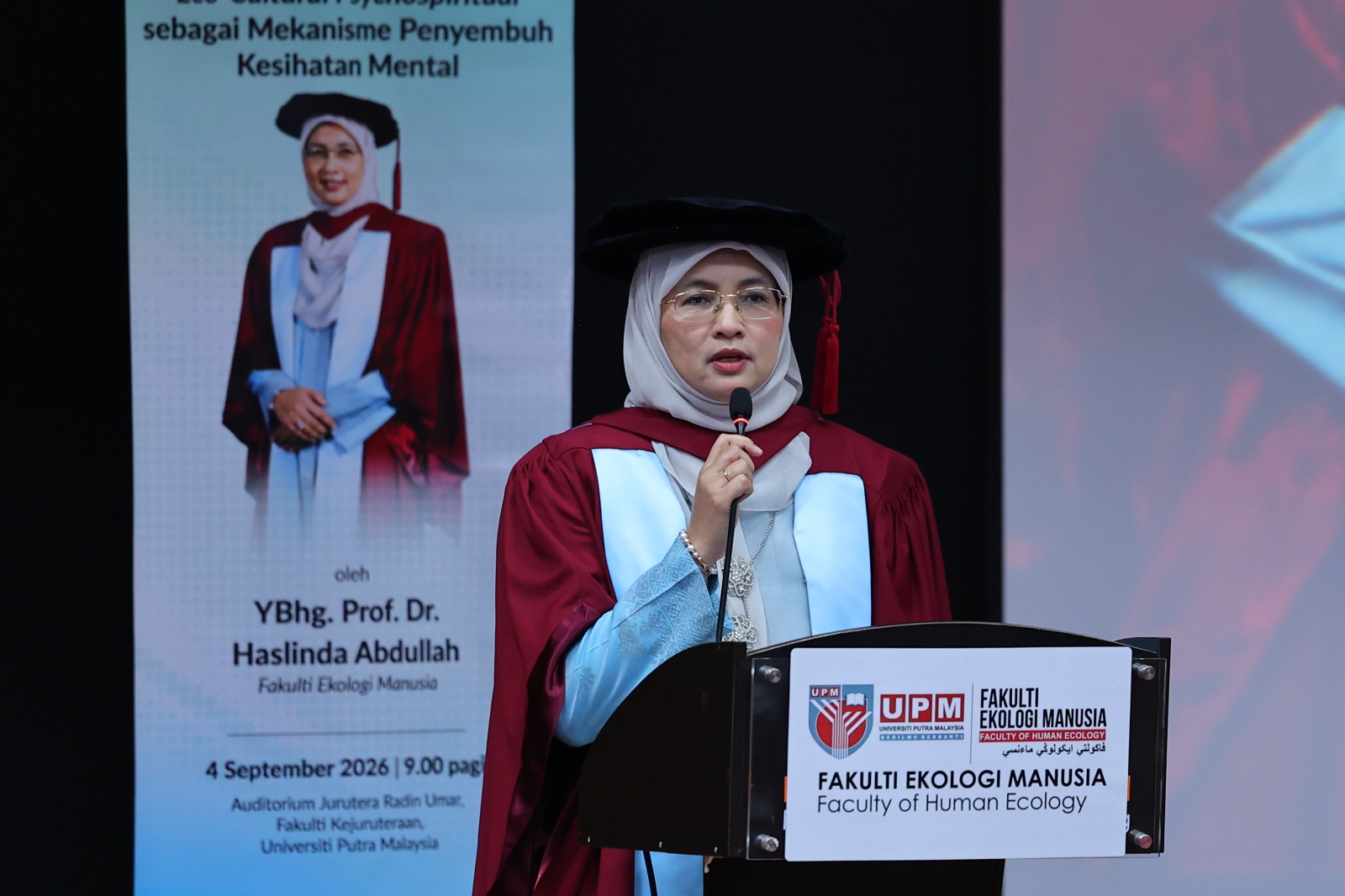
The Inaugural Lecture by Professor Dr. Haslinda Abdullah on 4 September 2026, entitled The Eco-Cultural Psychospiritual Model Approach as a Mechanism for Mental Health Healing, provides broad opportunities for reflection on leadership studies, sociology and community development. Although the lecture is grounded in the fields of psychology and mental well-being, the ideas presented also provide an opportunity to examine issues concerning people, leadership and social life.
One of the key strengths of the lecture is its emphasis that people cannot be understood separately from the context of their lives. The model presented connects psychological aspects with the environment, culture and spirituality. Human well-being is shaped through the relationships between individuals and their families, communities, social institutions, cultures and broader systems of life.
Discussions in leadership studies often focus on the characteristics, skills, decisions and capabilities of individual leaders. This approach is important because leaders still require competence. However, if the analysis stops at the individual level, the understanding of leadership remains incomplete. Leaders do not operate in a vacuum. They lead within particular organisations, are influenced by culture, encounter structural factors, build relationships and exercise power within the values of society.
This is where an ecosystem approach offers a useful comparative perspective. If an individual's well-being is influenced by family, peers, school, the workplace, culture and social norms, leadership actions can likewise be understood in relation to the environment that shapes them. In other words, leadership analysis should consider not only who the leader is, but also how culture, structures and social relationships influence the way power is exercised.
For example, when bullying occurs in schools, the solution should not stop at identifying the bully and the victim. Action against individuals remains necessary, but understanding the issue should also encompass peer relationships, school culture, the role of adults, reporting channels and whether students feel safe enough to speak up. An individual approach focuses on who committed the wrongdoing. An ecosystem approach adds another question: what conditions allow the wrongdoing to occur and recur?
From a leadership perspective, this question ultimately concerns the use of power. Power is not necessarily negative. Teachers require authority to educate, leaders require power to manage, and institutions require rules to function. The issue lies in how power is exercised. Power can guide or oppress, create opportunities or silence voices, protect the vulnerable or leave them to face pressure on their own.
In certain contexts within Malaysian society, culture, religion, family relationships and respect for social structures also shape how people interact with authority. The values of respect and courtesy are strengths that should be preserved. However, respect should not develop into fear to the extent that individuals lose the space to speak up when something is wrong.
The questions of respect, the courage to speak up and responsibility also resonate with the discussion in the lecture concerning the ideas of the late Ustaz Prof. Dr. Siddiq Fadzil. Within this framework, a culture of knowledge is not merely an effort to acquire more knowledge. It also develops individuals who are capable of thinking, evaluating and expressing their views with proper conduct and confidence. From a leadership perspective, this reminds us that obedience alone is insufficient. The space to speak responsibly is also part of a healthy organisational and social life.
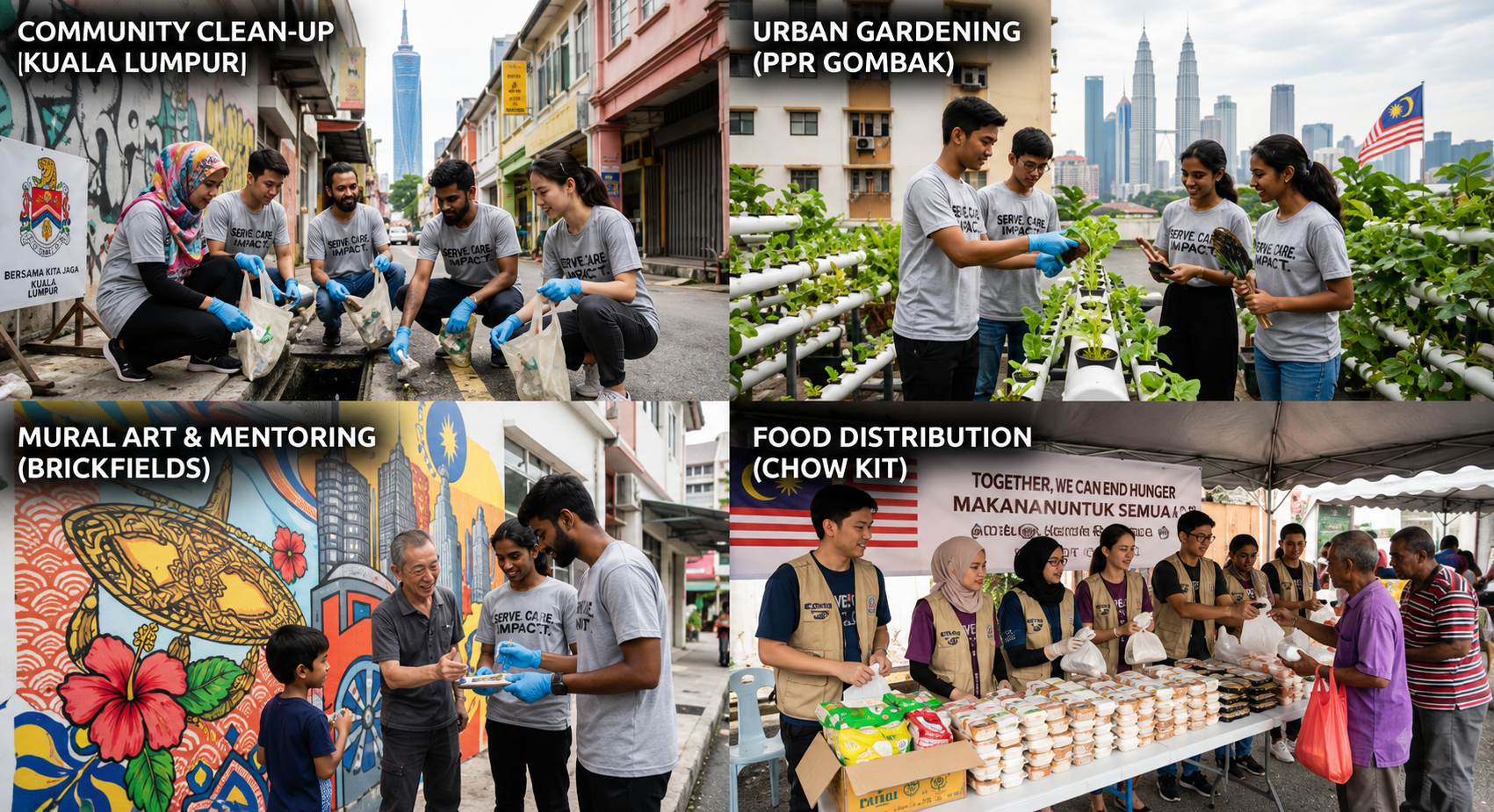
Another strength of the lecture is its connection between knowledge and practice. Experiences gained through engagement with communities, non-governmental organisations, women, children, youth and vulnerable groups are brought back to the university as sources of learning.
Community experiences are not viewed merely as information or statistics, but as lived experiences that need to be understood alongside their socioeconomic, cultural and social-relational contexts. This approach is important in the social sciences because theories must continually be engaged in dialogue with the realities of human life.
One of the important values of a university can be seen through this two-way relationship. Knowledge moves from the university to society through research, training and service. At the same time, community experiences need to return to the university to improve the way we teach, conduct research and contribute to policy development.
The Inaugural Lecture by Professor Dr. Haslinda Abdullah ultimately reminds us that one of the foundations of responsible leadership is the ability to understand people. Such understanding requires attention to family backgrounds, culture, structures that influence choices, and experiences that give meaning to people's lives.
This is where Leadership Studies intersects with Sociology, Anthropology and human development. Leadership is not merely about leading people; it is also about understanding the world in which those people live.
Date of Input: 04/09/2026 | Updated: 05/09/2026 | alyarahim
MEDIA SHARING