Written by
Dr. Syafila Kamarudin
Head of Cyber Generation Laboratory
Institute for Social Science Studies
Today's younger generation is growing up in a communication environment that is vastly different from that experienced by previous generations. In the past, television, radio and printed materials were among the main sources of information and entertainment. Today, however, the digital world is only a fingertip away.
A single 'swipe' takes users from one video to another. One viewing can open the door to dozens of new content recommendations. Often without realising it, what young people see, hear and follow each day can gradually influence how they understand themselves, society and the world around them.
This is the reality of life for the digital generation in an algorithmic world.
When Algorithms Determine What We See
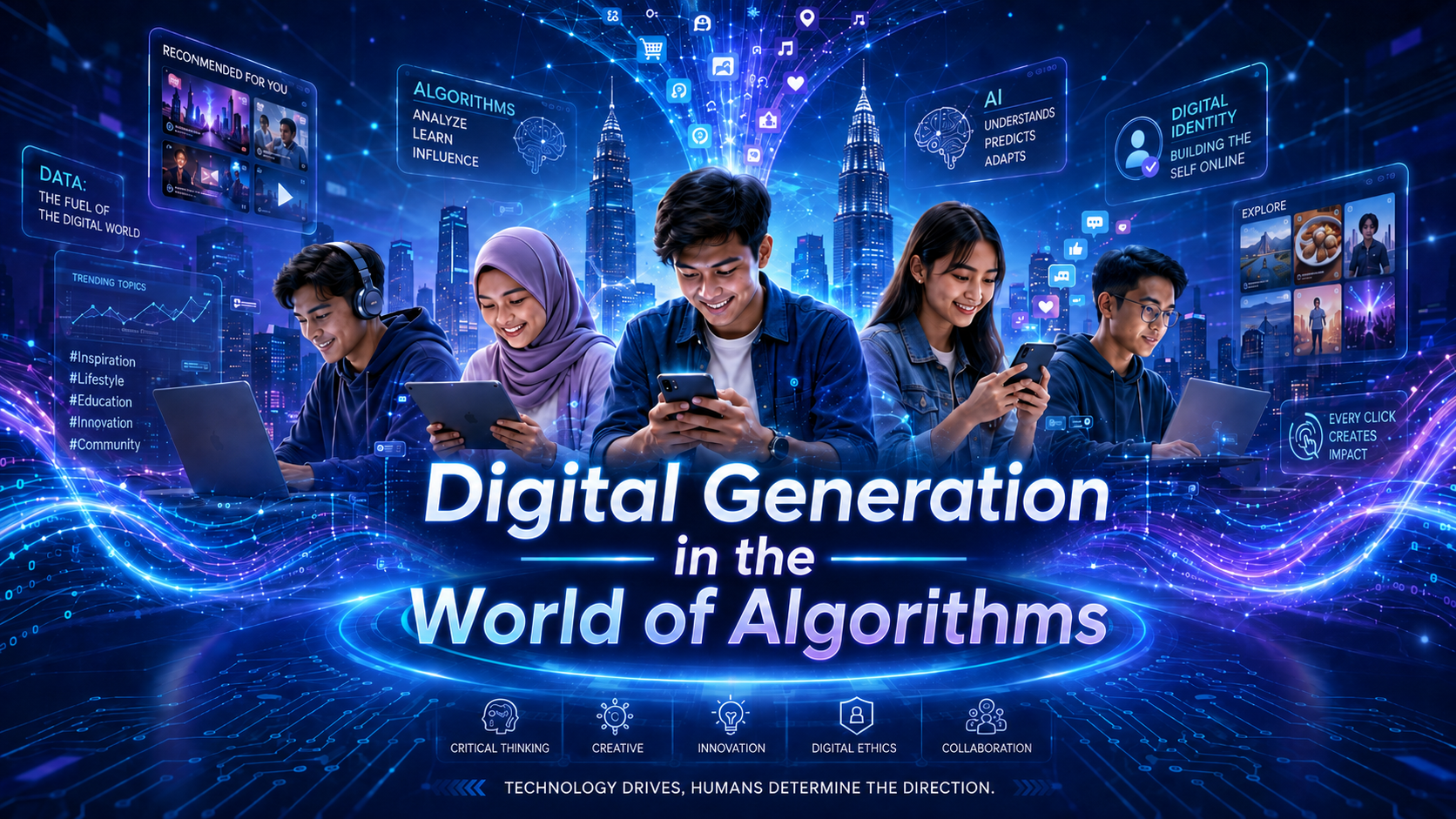
Social media today is no longer merely a platform that waits for users to choose content. Behind the screen, algorithms play an important role in determining what appears based on an individual's patterns of use and interaction.
When users watch a video to the end, click 'like', conduct a search, share content or interact with particular material, the system learns from those patterns. It then recommends more content that it considers relevant.
This process makes the digital experience increasingly personalised. Two individuals using the same platform may receive very different content based on their respective usage histories.
For young people who are still developing their identities, emotions, values and views of life, this situation deserves careful attention. They do not merely choose content; those choices also influence the content that will continue to be presented to them.
In other words, every 'swipe' leaves a trace that helps determine what will appear on the next 'swipe'.
Competing for Attention
In today's digital ecosystem, human attention has significant value. Various platforms compete to keep users in front of their screens. This is why another video appears as soon as one ends, and why content similar to something that has captured a user's attention is subsequently recommended.
This creates such a seamless social media experience that users may not realise how much time they have spent on the platform.
For the younger generation, the issue is not simply how long they use smartphones. We also need to understand the types of content that fill that time and how such content influences their thinking, emotions and social interactions.
From a communication perspective, media are not merely channels for conveying information. Content that is repeatedly encountered can also influence a person's perception of social reality.
When young people are constantly exposed to portrayals of perfect lives, a culture of comparison, sensational content or certain behaviours that receive substantial attention, they may begin to regard these things as normal or as an accurate reflection of life in society. This is where digital literacy becomes increasingly important.
It Is Not Just About Screen Time
Discussions about technology use among young people often focus on screen time. How many hours a day do they use smartphones? How long do they spend on social media? Has their use become excessive?
All of these questions are important, but screen time alone does not provide a complete picture of a person's digital experience.
One teenager may use a smartphone for learning, searching for information, creating content or communicating with family and friends. At the same time, another person may spend the same amount of time viewing inappropriate content, engaging in social comparison or encountering risky interactions.
The amount of time may be the same, but the digital experiences can be very different.
Therefore, attention should be paid not only to the amount of time spent in front of screens, but also to the quality of the content, the purpose of use and the forms of interaction taking place within the digital environment.
Digital Literacy Is More Than the Ability to Use Technology
Today's generation is often regarded as technologically literate because they have grown up with smartphones, the Internet and social media.
However, being proficient in the use of technology does not necessarily mean that a person has strong digital literacy. Knowing how to use TikTok, Instagram, YouTube or artificial intelligence applications is not the same as being able to assess the credibility of information, understand privacy risks, identify scams or recognise how content may be attempting to influence emotions and behaviour.
The digital generation needs to develop the habit of asking several important questions when they are online. Who created this content? Why is this content being shown to me? Is this information accurate? Why is this content being circulated? What happens to the data that I share?
The ability to question and evaluate before believing, sharing or acting is an increasingly important part of digital literacy in contemporary society.
Communication Remains the Main Line of Defence
Although technology is becoming increasingly sophisticated, human communication continues to play an important role in shaping healthier digital experiences.
Within families, open communication allows teenagers to share their online experiences without fearing that they will immediately be punished or blamed. They need a safe space to talk when they receive suspicious messages, encounter cyberbullying, see disturbing content or are uncertain about certain information.
In education, teachers and educational institutions also have a role in helping young people understand that the use of technology must be accompanied by ethics, responsibility and critical thinking.
Society shares this responsibility. Digital safety cannot be placed entirely on individuals. Digital platforms, educational institutions, families, policymakers and communities must each play their part in creating a safer and more responsible digital ecosystem.
Shaping a Discerning Digital Generation
Technology will continue to evolve. Platforms will change, new applications will emerge and algorithms will become increasingly intelligent. The rise of artificial intelligence is also making the boundary between human-created content and technology-generated content increasingly difficult to distinguish.
Therefore, the future challenge is not merely to ensure that young people have access to technology. The greater challenge is to ensure that they have the ability to use technology critically, ethically and responsibly.
We may not be able to determine every piece of content that appears on their screens. However, we can help them develop the ability to question, evaluate and make informed decisions when they encounter such content.
In a world increasingly shaped by algorithms, the question we need to consider is no longer simply how long young people spend in front of screens.
We must also ask: what is shaping their thinking while they are behind those screens? Every 'swipe' may appear to be nothing more than a small movement on a screen. Yet behind every 'swipe' are choices, data and algorithms that gradually shape a person's digital experience.
The digital generation cannot be separated from technology. However, technology should not be allowed to determine entirely how they see the world.
This is where digital literacy, critical thinking and human communication must work hand in hand so that the digital generation does not merely become users of technology, but users who understand, evaluate and use technology wisely.
Date of Input: 12/08/2026 | Updated: 12/08/2026 | alyarahim
MEDIA SHARING